Sweepstakes Casino Game Selection: How to Build a 50-Game Catalog
By Games4Titans · May 22, 2026
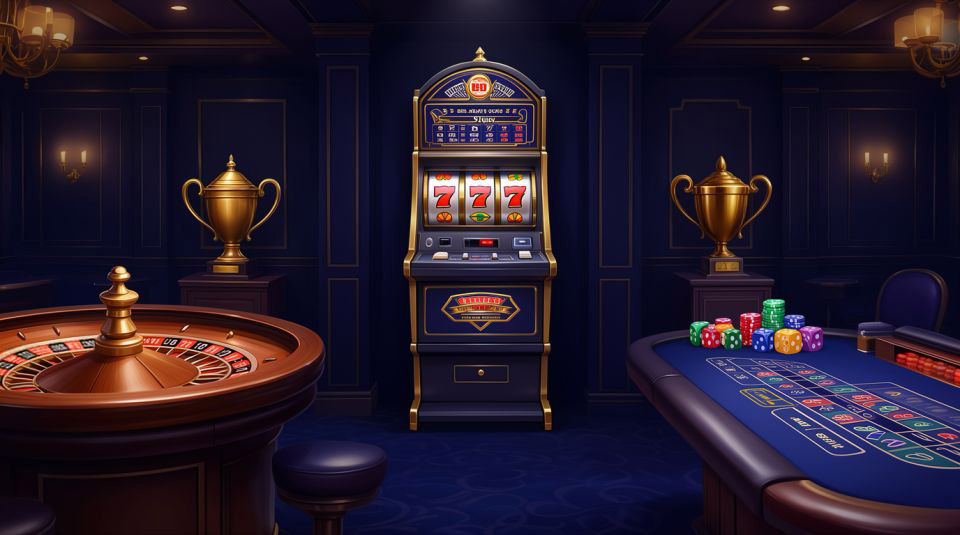
Most sweepstakes casinos fail not because of bad marketing or weak payment processing — they fail because players log in, see 12 mediocre slots, and never come back. Game selection is the single biggest driver of player retention, session length, and lifetime value. Get it wrong, and your acquisition spend is wasted.
This guide breaks down exactly what a competitive 50-game catalog looks like: the right mix of game types, the ratios that keep players engaged, and how to build it without burning through your entire budget in month one.
Why 50 Games Is the Magic Number
Operators launching with fewer than 30 games consistently report higher churn in the first 30 days. Players explore, exhaust their options within a few sessions, and leave. On the other end, launching with 200+ games creates decision paralysis and dilutes your marketing — you can not effectively promote games nobody can find.
50 games hits the sweet spot. It is enough variety to keep different player profiles engaged for months, small enough to curate quality, and manageable enough to promote through lobby placement, featured sections, and targeted campaigns.
The key is not just having 50 games. It is having the right 50 games across the right categories, at the right quality tiers.
The Four Game Categories Every Sweepstakes Casino Needs
Players are not a monolith. Some want fast dopamine hits. Some want strategic depth. Some want casual, low-commitment play. Your catalog needs to serve all of them.
Slots (Target: 60% of Your Catalog — 30 Games)
Slots are the revenue engine. Across the sweepstakes industry, slots account for 70-80% of total wagers. They are simple to understand, visually engaging, and support the widest range of themes and mechanics.
But not all slots are created equal. Your 30-slot selection should include:
5-8 premium feature-rich slots. These are your flagship titles — the games you put in the hero banner, the ones with bonus rounds, free spins, multipliers, and expanding wilds. High-volatility options that create the big-win screenshots players share on social media. Think 5-reel, 20+ paylines, with at least two bonus mechanics per game.
10-12 mid-tier slots. Solid gameplay, good themes, medium volatility. These are the workhorses — games players settle into after the initial exploration phase. They should cover a range of themes: mythology, adventure, classic fruit, Asian-inspired, Egyptian. Theme diversity matters more than you think. A player who ignores your Egyptian slot might play your Norse mythology slot for hours.
8-10 classic and simple slots. 3-reel games, straightforward paylines, low to medium volatility. These serve two audiences: nostalgic players who prefer traditional slot mechanics, and new players who find complex bonus rounds overwhelming. Do not skip these. They have lower per-spin revenue but higher session counts.
2-3 tumble/cascade mechanic slots. The tumble reel mechanic (where winning symbols disappear and new ones fall in) is increasingly popular with younger demographics. Having a few ensures you are not missing an entire player segment.
Table Games (Target: 15% of Your Catalog — 7-8 Games)
Table games attract a different player profile: typically higher-value, longer sessions, and more loyal once engaged. They also add credibility — a casino without blackjack does not feel like a casino.
Your table game selection should cover:
Blackjack (2 variants). One classic version, one with a twist (multi-hand, side bets, or a VIP-styled variant). Blackjack players are habitual — they find their preferred version and stick with it.
Roulette (1-2 variants). European roulette is the standard. Consider adding American roulette or a 3D variant for visual differentiation.
Baccarat (1 variant). Essential for operators targeting Asian markets or high-roller segments. Punto Banco is the standard.
Poker variant (1-2 games). Video poker, Caribbean Stud, or Texas Hold'em bonus poker. These bridge the gap between slots and pure table games.
Specialty (1 game). Hi-Lo, Sic Bo, or Red Dog. Something different that rounds out the section and gives explorers something to discover.
Scratch Cards and Instant Win (Target: 15% of Your Catalog — 7-8 Games)
Scratch cards are the most underrated category in sweepstakes casinos. They serve a critical function: quick sessions. Not every player has 30 minutes. Scratch cards deliver a complete play experience in 15-30 seconds.
They also convert well as first-game-played experiences for new users. The mechanic is universally understood — scratch and reveal. No rules to learn, no strategy to figure out.
Aim for variety in prize structures:
3-4 match-three style scratch cards. The classic format. Different themes keep them fresh.
2-3 multiplier or bonus scratch cards. Games with X multipliers, progressive reveals, or mini-bonus rounds within the scratch card. These offer more depth for players who find basic scratch cards too simple.
1-2 high-value jackpot scratch cards. Games with a top prize significantly higher than the norm. These drive aspirational play and marketing hooks.
Arcade and Crash Games (Target: 10% of Your Catalog — 5 Games)
Crash games and arcade-style games are the fastest-growing category in sweepstakes. They skew younger, they are social (players can see each other's bets and cashouts in real time), and they create addictive short-loop gameplay.
1-2 crash games. The core mechanic: a multiplier rises, and players cash out before it crashes. Simple concept, surprisingly deep strategy, and the social element drives engagement.
2-3 arcade games. Mines, Plinko-style, or dice games. These fill the gap between traditional casino games and the emerging crypto-casino aesthetic that younger players gravitate toward.
Why Category Ratios Matter for Retention
The 60/15/15/10 split is not arbitrary. It is based on observed player behavior patterns across sweepstakes platforms.
Player lifecycle follows a predictable path: New players start with slots (familiar, easy). After 2-3 sessions, they explore table games or scratch cards for variety. By week two, they have established favorites but continue trying new games periodically. Crash and arcade games serve as session extenders — players hop into them between longer slot sessions.
Without table games, you lose the exploration phase. Without scratch cards, you lose the quick-session players. Without arcade games, you miss the younger demographic entirely. And without enough slots, you do not have the depth to sustain the players you have acquired.
Session length data tells the story. Platforms with all four categories report average sessions of 18-25 minutes. Slots-only platforms report 8-12 minutes. Every additional minute of session time correlates with higher lifetime value.
Quality Tiers: Premium vs. Volume
Not every game in your catalog needs to be a premium title. In fact, trying to fill all 50 slots with premium games is a budgeting mistake. Here is how to think about quality tiers:
Tier 1: Premium Flagships (8-10 Games)
These are your best-in-class titles. High-end visuals, complex bonus mechanics, smooth animations, distinctive themes. They go in the hero banner, the featured section, and your marketing materials. They are what new players see first.
Budget allocation: 40-50% of your total game spend should go here. These games do the heavy lifting for first impressions and marketing.
Tier 2: Solid Mid-Range (20-25 Games)
Good visuals, reliable gameplay, proven mechanics. Not flashy, but polished and professional. These are the games that fill out your lobby and give players variety without compromising quality.
Budget allocation: 35-40%. You need volume here, so cost-efficiency matters.
Tier 3: Classic and Filler (15-17 Games)
Simple graphics, straightforward mechanics. 3-reel slots, basic scratch cards, standard table game variants. They exist for completeness and for players who prefer simplicity.
Budget allocation: 15-20%. These should be inexpensive. If your provider prices classic 3-reel slots the same as premium 5-reel feature slots, find a different provider.
Budget Planning: Rent vs. Buy
There are two fundamental approaches to building your catalog, and your choice depends on your business stage and cash position.
Renting a Starter Package
Monthly fees (typically a flat monthly minimum plus a small percentage of gross gaming revenue) give you access to a catalog immediately. The advantages are obvious: low upfront cost, quick launch, and the ability to swap games in and out as you learn what your players prefer.
The disadvantage is equally obvious: you are paying forever. After 18-24 months, you have likely paid more in cumulative rental fees than the purchase price of those games. And you do not own anything — if the provider relationship ends, your games disappear.
Best for: New operators testing the market, operators with limited capital, operators who want to validate their audience before committing.
Buying a Core Catalog
Purchasing games outright costs more upfront but eliminates recurring fees. If you plan to operate for more than two years — and you should, since sweepstakes is not a quick-flip business — buying makes financial sense.
The key advantage that is often overlooked: zero revenue share. Most providers take 10-20% of your gross gaming revenue on rented games. On purchased games from the right provider, that number drops to zero. On a platform generating $50,000/month in GGR, the difference between 15% revenue share and 0% revenue share is $7,500/month — $90,000/year going back into your pocket instead of your provider's.
Best for: Operators with capital who are building for the long term. Operators who have already validated their market with a rental package and are ready to scale.
The Hybrid Approach
Rent a broad package to launch. Track which games get the most play over 90 days. Then buy the top 20-30 performers outright and let the rest rotate through the rental catalog. This gives you data-driven purchasing decisions instead of guessing.
Common Selection Mistakes to Avoid
Mistake 1: All slots, nothing else. We covered this, but it bears repeating. Slots-only catalogs have measurably worse retention than diversified catalogs.
Mistake 2: Chasing themes over mechanics. A beautifully themed slot with boring base gameplay will underperform a plainly themed slot with engaging bonus rounds. Mechanics first, themes second.
Mistake 3: Ignoring volatility balance. If all your slots are high-volatility, casual players will churn. If all are low-volatility, thrill-seekers will leave. Mix it deliberately.
Mistake 4: Launching with unverified math models. Every game should come with documented RTP, volatility classification, and hit frequency. If your provider can not supply these numbers, that is a red flag — you have no way to verify the games are fair or to satisfy regulatory requirements.
Mistake 5: Ignoring mobile performance. Over 70% of sweepstakes play happens on mobile devices. Every game in your catalog must run smoothly on a 4-year-old smartphone, not just the latest flagship.
Games4Titans: 147+ Games Across Every Category
Building the catalog described above requires a provider that covers all four categories — and most do not. Games4Titans offers 147+ HTML5 casino games spanning slots, table games, scratch cards, and specialty games. Every game runs on a GLI-19 certified RNG, plays natively on any device, and is sweepstakes-ready with dual-currency (GC/SC) support.
Operators can rent a starter package or purchase games outright with zero revenue share. Source code is available for operators who want full control and customization capability.
The entire catalog was built over 16 years by CasinoWebScripts, a studio with a track record that predates the sweepstakes boom by a decade. These are not hastily assembled games chasing a trend — they are production-tested titles that have been running on live platforms for years.
Ready to build your catalog? Browse the full game library or contact us to discuss a package tailored to your launch plan.
16+ years building casino games. Our team combines game development expertise with deep industry knowledge to help operators succeed with the right game portfolio.